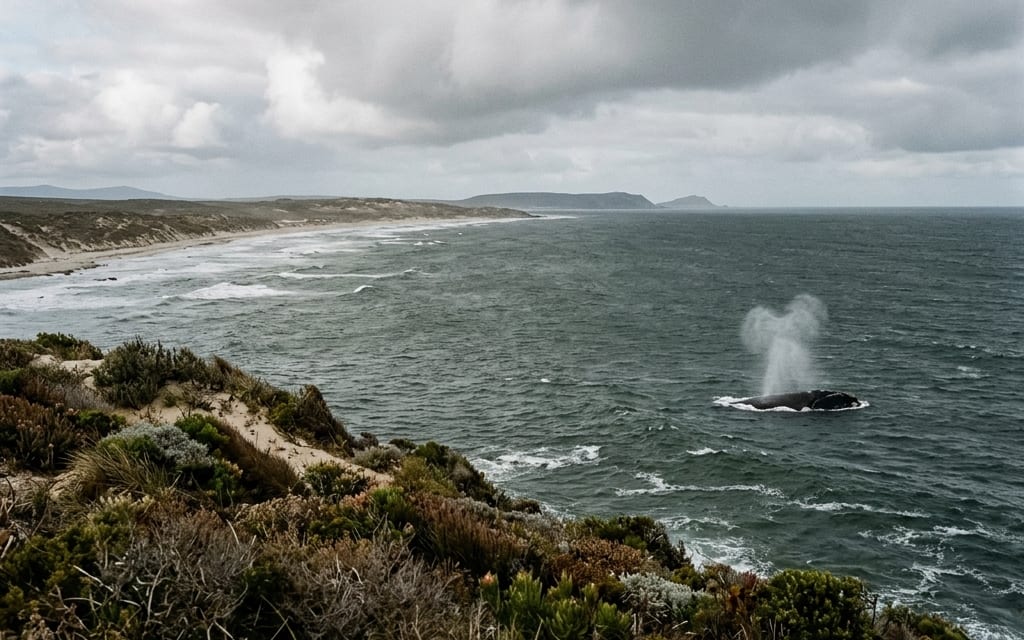
Guide · Whale season at the southern tip
Whales from the dunes: land-based whale watching at Cape Agulhas
From June to November the southern rights come close enough to see from the sand — a shore-watcher's guide to land-based whale watching at Cape Agulhas.
By Madelaine & family · 10 July 2026 · 8 min read
In Hermanus, whale watching is an industry: boats, boards, a festival, a man with a kelp horn. Down here it is quieter than that. Every winter the southern right whales come up from the Southern Ocean to breed and calve in the shallow water along this coast, and from roughly June to November they pass Suiderstrand close enough to watch from the dunes — no boat, no ticket, no schedule except theirs.
We should be honest before we hand you the binoculars: nobody can promise you a whale. Some days the sea is full of them and some days it is just sea. What we can promise is that this stretch of coast gives you as good a chance from dry land as anywhere in the country — and that the waiting, done from a dune with coffee, is no hardship at all. Here is where we stand, and when.
Jun–Nov
the whale window
Southern rights migrate up from the Southern Ocean to breed and calve in the shelter of this coast, arriving early winter.
Aug–Oct
the honest peak
Cows and calves settle inshore in late winter and spring — the months when a sighting stops being luck and starts being likely.
~20 m
as close as they come
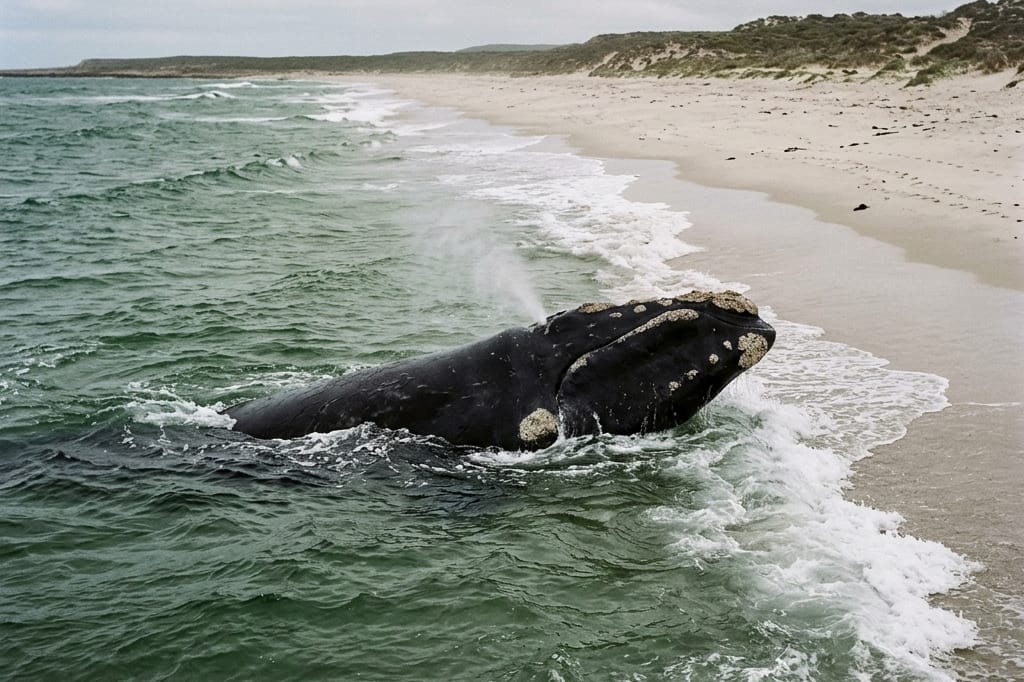
At Struisbaai the whales some seasons drift to within about twenty metres of the shore — closer than most boats are allowed to take you.
Why the southern tip is a grandstand
Southern rights are coastal animals in winter. They come here for calm, shallow water to calve in, which means they hug the shore — often just beyond the backline — rather than passing far out at sea. Add a coastline of low dunes and rocky points that lift you a few metres above the water, and the whole southern tip becomes a viewing deck. The trick is not finding a boat; it is simply being somewhere with a long view of the sea, often enough for the odds to work.
That is the real advantage of staying inside the reserve: the sea is in front of the house all day, so you are watching whenever the whales decide to arrive. We have broken off a braai mid-skottel for a breach. The binoculars live on the windowsill in season, and they get used more than the television.
Land-based whale watching at Cape Agulhas: where to stand
Four places, in the order we rate them. None needs a booking, and all of them are ordinary, beautiful walks even on a whale-less day:
- 01
The dunes at Suiderstrand
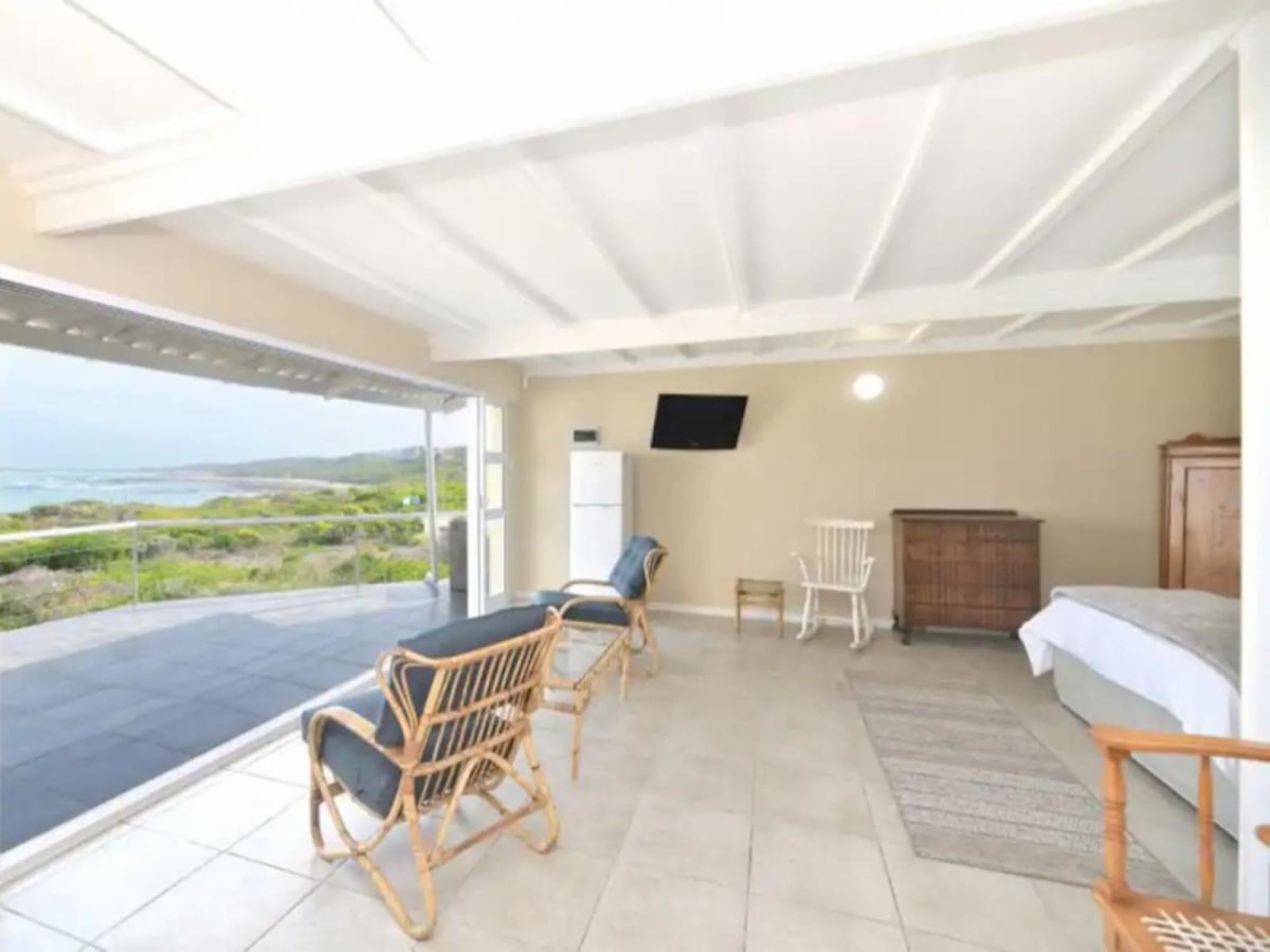
Our home ground. Walk out of the garden gate, cross the reserve, and take the nearest dune with a clear line at the sea. In season the whales hold station off this shore for hours — and the main-suite balcony works when the southeaster doesn't want you outside.
- 02
Struisbaai beach and harbour wall
Fifteen minutes away, and the closest encounters on this coast: some seasons the whales come within about twenty metres of the sand along Struisbaaiplaat. Scan from the harbour wall, then walk the beach north and keep an eye past the breakers.
- 03
Below the lighthouse, L'Agulhas
Take the boardwalk from the lighthouse toward the southernmost tip and watch the water off the rocks. It is the most dramatic backdrop of the four — two oceans, one whale — and pairs naturally with the lighthouse climb.
- 04
The cliffs at Arniston
Under an hour east, and the only true height on this list. The cliffs above the fishing village give you a gannet's view of the bay, and the whales read as whole animals rather than surfacing backs. Make a morning of it.
The honest calendar
The first whales show up in June, and July is early season: they are arriving, not yet settled, and a sighting is a gift rather than a routine. August is when it turns — the cows and calves move inshore, and from then until October the question most mornings is not whether there are whales but how many. November is the long goodbye, with stragglers sometimes hanging on toward December.
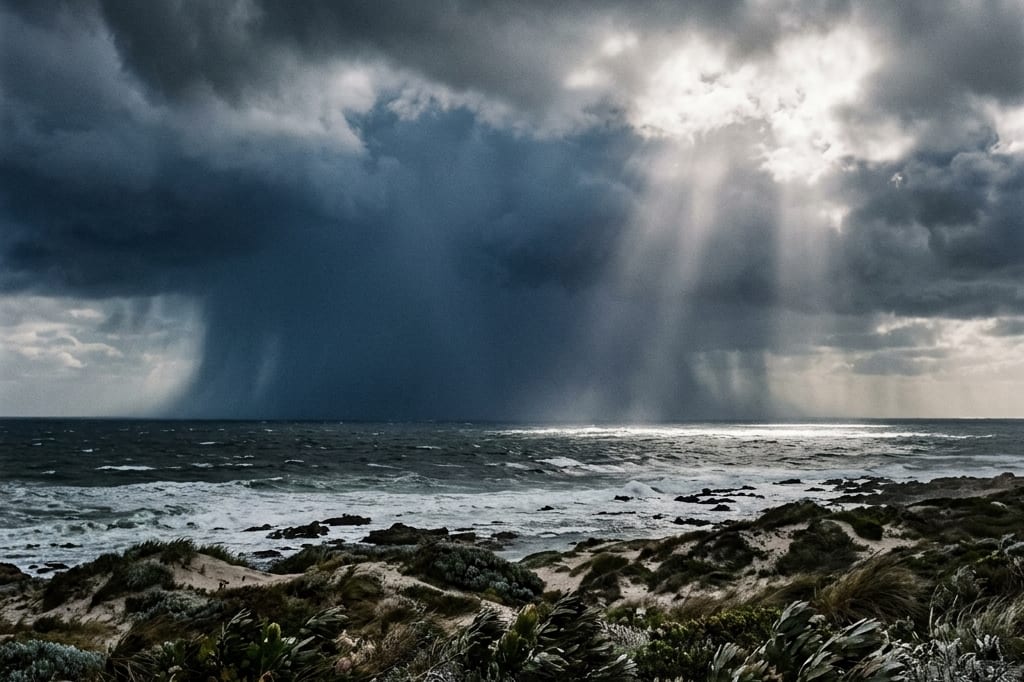
So if whales are the whole point of your trip, book August to October. But we will put in a word for the edges of the season. A July at this house is storm-watching from the window seat while a front comes through, the pizza oven earning its keep by mid-afternoon, and the reserve to yourself — and when the wind makes the coast unreasonable, the Elim wine ward is forty-five minutes inland and largely indifferent to weather. The first whale of winter, seen alone from a cold dune, beats a crowded peak-season sighting by some distance.
What to bring, and how to look
Binoculars, first and always — the difference between “I think that was a whale” and watching a calf practise breaching. Look for the blow: a V-shaped puff that hangs over the water a second longer than spray should. Then be patient; a surfacing whale keeps a rhythm, and once you have its interval you can follow it along the coast for an hour. Dress for wind whatever the forecast says, and give the animals their distance if you are on the water’s edge — this is their nursery, not a show.
Start the conversation
Whale season from your own dunes
Gans-te-Ver sleeps ten inside the Suiderstrand reserve — five en-suite bedrooms, the sea in front of the house, and a balcony made for the August-to-October peak. Message Madelaine to hold your dates.